Can a New Yorker With a Tracheostomy Get 24/7 Nursing at Home?
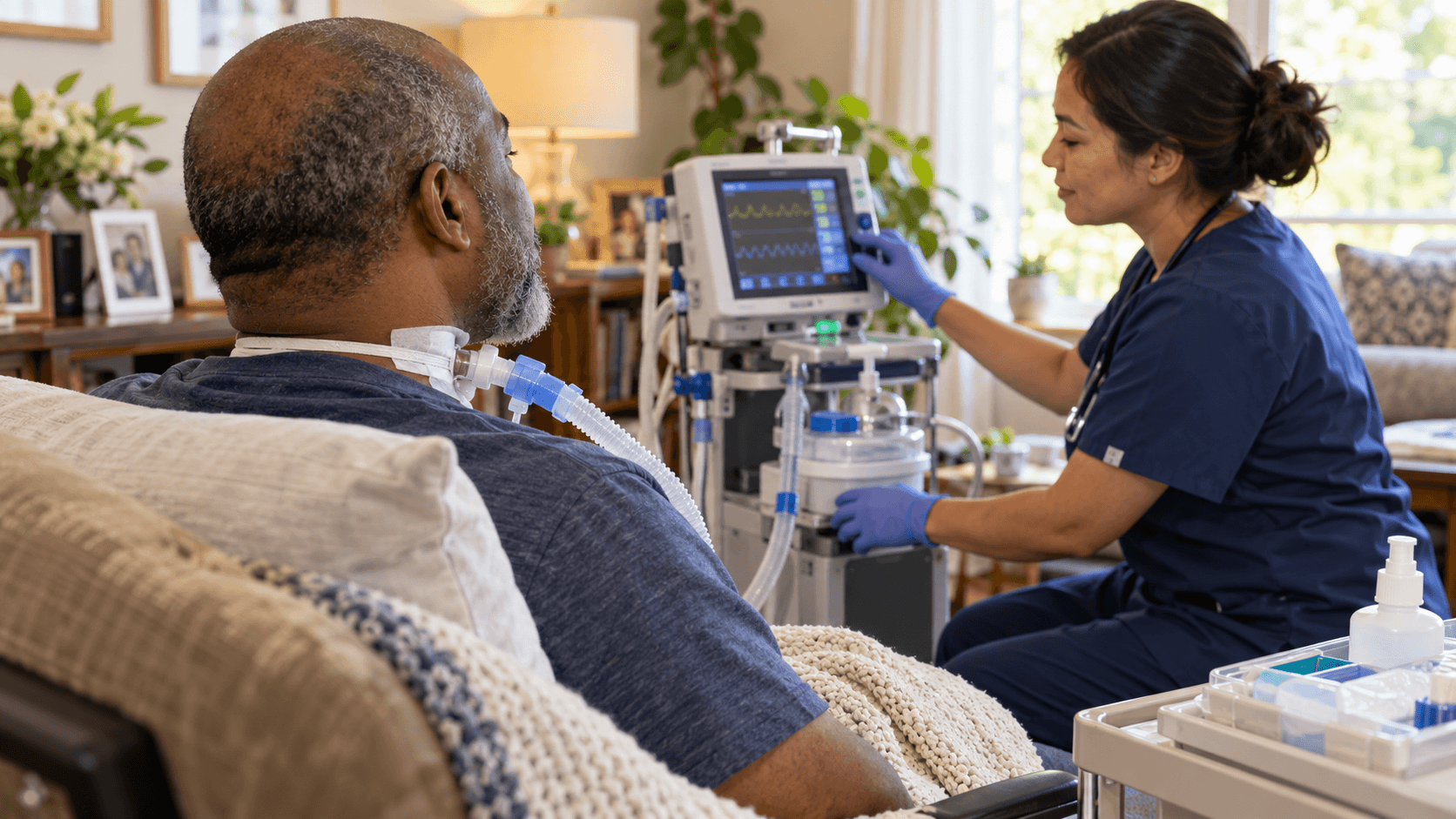
A patient with a tracheostomy may need a nurse nearby at all times. Families often hear that Medicare covers “skilled nursing,” then discover that its home health benefit does not pay for a nurse to remain in the home around the clock. New York Medicaid has a different service for people who need extended, continuous nursing care: private duty nursing, or PDN.
Whether a patient can receive 24 hours a day, seven days a week of nursing at home depends on an individual assessment, medical documentation, and authorization by the responsible Medicaid payer. A tracheostomy is an important part of the clinical picture, but it does not automatically qualify someone for 168 nursing hours per week—or establish that every hour must be staffed by a registered nurse (RN).
What is private duty nursing?
PDN provides individual nursing care in a person’s home when their needs are more continuous than the visits generally available through a certified home health agency. New York permits medically necessary PDN to be provided by appropriately licensed RNs or licensed practical nurses (LPNs) under the applicable orders and care plan. It can be authorized in extended shifts. New York State’s private duty nursing guidance and partial MLTC model contract describe this benefit.
For example, a request for 24/7 PDN means 168 hours of nursing coverage each week, generally staffed by multiple nurses working shifts. It does not mean that one nurse lives in the home or works continuously.
Does Medicare pay for a 24/7 nurse at home?
No, not through Medicare’s home health benefit. Medicare may cover qualifying part-time or intermittent skilled nursing visits for a person who meets its home health requirements. It expressly excludes 24-hour-a-day care at home. A person can therefore qualify for Medicare nursing visits and still need a separate source of coverage for continuous nursing shifts. Medicare’s home health coverage page explains those limits.
This is why families should ask two distinct questions:
-
Does the patient qualify for Medicare-covered intermittent home health visits?
-
Does the patient also need Medicaid-covered private duty nursing shifts?
The answer to the first question does not decide the second.
Which New York plan handles a request for 24/7 nursing?
Patient’s coverage Where the family should start
Partial MLTC Ask the MLTC plan for a PDN assessment and authorization. PDN is part of the long-term care benefit. Medicaid Advantage Plus (MAP) Ask the MAP plan. Its integrated benefit includes medically necessary PDN, skilled nursing, and home health services. PACE Ask the PACE care team to assess the nursing need and arrange covered care. Mainstream Medicaid managed care (MMC) Ask the MMC plan for a PDN determination and discuss how the patient’s ongoing long-term care needs affect enrollment. Health and Recovery Plan (HARP) Ask the HARP plan for a PDN determination and coordination of the patient’s physical and behavioral health needs. Medicaid fee-for-service Work with the ordering clinician and a Medicaid-enrolled PDN provider on a prior approval request. Medicare without Medicaid Medicare home health will not cover 24/7 PDN. Ask a hospital social worker or benefits counselor to review Medicaid eligibility and other possible coverage.
New York identifies private duty nursing as a community-based long-term care service. Its MAP benefit description expressly includes PDN, while the state’s MLTC overview lists it among covered services. New York also lists PDN in its overview of Medicaid managed care benefits. Plan enrollment and the patient’s particular benefit arrangement should be checked before directing a request or claim to a payer.
PACE is generally for people age 55 or older who meet its other eligibility rules. MAP and partial MLTC have different eligibility requirements. A family should not switch plans solely because a particular plan type appears in this table; first determine the patient’s current coverage and the appropriate authorization pathway. New York’s MLTC program page describes the plan types.
Does a tracheostomy automatically qualify a patient for an RN 24 hours a day?
No. The payer must assess the patient’s actual nursing needs and the level of clinician required to meet them safely. Two people with tracheostomies can have very different needs. One may need scheduled nursing visits and a trained caregiver between visits. Another may have frequent, unpredictable skilled needs throughout the day and night that support continuous nursing coverage.
The same distinction applies to RN versus LPN staffing. New York’s PDN benefit can involve either license. If the request is specifically for an RN for every shift, the clinical record should explain why an RN is necessary for those hours and why an LPN would not meet the documented needs. The decision must be based on the patient’s condition and applicable nursing scope and supervision requirements—not the word “trach” alone. New York’s partial MLTC contract identifies both RNs and LPNs as PDN providers.
What should a 24/7 PDN request document?
The treating physician or nurse practitioner and the proposed nursing provider should present a specific care plan, rather than a general statement that the patient “needs 24-hour care.” New York’s PDN guidance calls for a written order explaining medical necessity and identifying the proposed provider and requested services.
The clinical submission should make clear:
The patient’s diagnoses, respiratory status, equipment, treatments, and current care needs.
Which tasks require skilled nursing judgment or intervention.
How often interventions are needed during the day and overnight, including unpredictable needs.
What has happened during recent emergencies, hospitalizations, or attempts to manage with fewer nursing hours, if applicable.
Who is available in the home, what training they have, and what care they can safely provide.
Why the requested number of hours is necessary.
Why the proposed RN/LPN staffing mix is appropriate.
How nursing shifts, supplies, equipment, backup arrangements, and other home services will work together.
For a patient leaving a hospital or facility, request this planning before discharge. The family should know which payer is reviewing the request, which nursing provider can staff the case, what hours have actually been authorized, and what the safe discharge plan is. Approval of hours and the ability to find nurses to cover every shift are separate practical issues.
What if the plan approves fewer hours than requested?
Ask for the written determination. Compare its reasoning with the physician’s order, nursing assessment, overnight records, and proposed care plan. If important clinical information was missing, submit it promptly. Families can also use the applicable plan appeal and, where available, external review or Medicaid fair hearing processes listed in the notice. Keep copies of the request, supporting records, authorization, and any denial or reduction notice.
Do not assume that a request for 168 hours has been approved because someone verbally said that the patient “qualifies for nursing.” Confirm the authorized hours, dates, nurse level, provider, and payer in writing before relying on the schedule.
The key takeaway
New York Medicaid can cover continuous private duty nursing at home, potentially including 24/7 shifts, when the patient’s individualized needs justify it and the responsible payer authorizes it. Medicare home health does not cover 24-hour nursing at home. For a patient with a tracheostomy, the strongest request explains exactly what skilled care is needed across the full 24-hour period and why the proposed RN or LPN staffing is necessary.