New York Invests $16.9 Million in Psychiatric Hospital Expansion
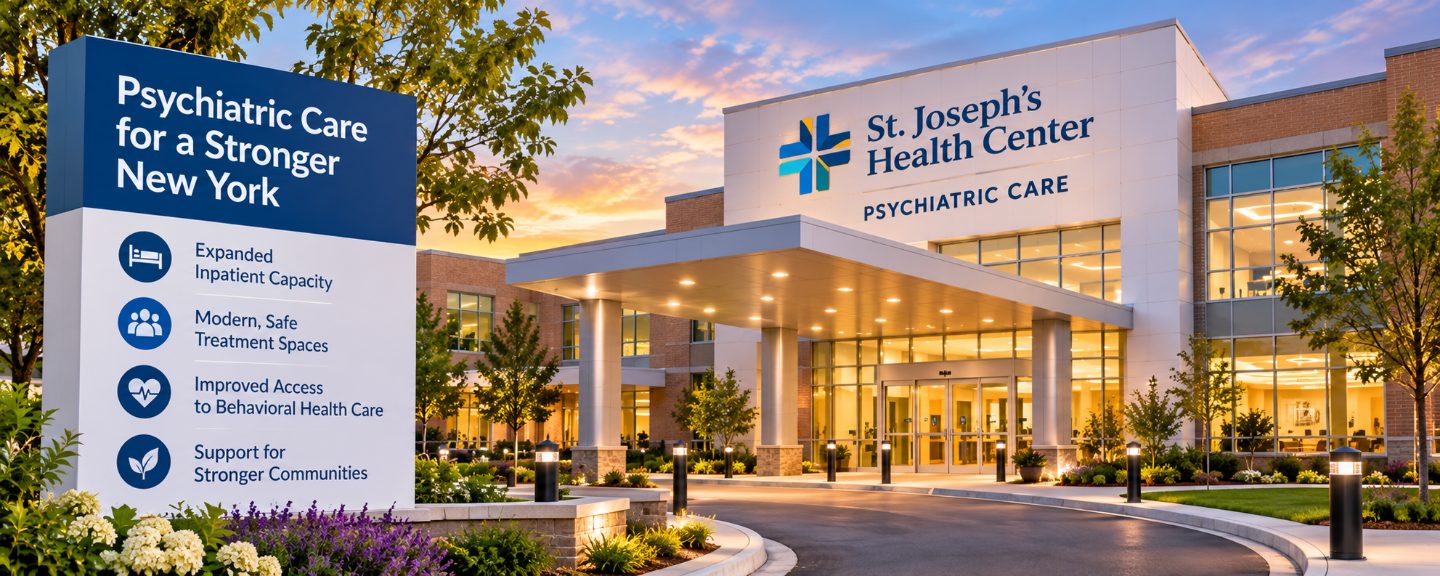
New York State is investing $16.9 million in a major psychiatric hospital renovation in Syracuse, expanding inpatient treatment capacity as demand for behavioral healthcare continues to grow.
On October 8, 2026, Governor Kathy Hochul announced the groundbreaking of a major renovation project at St. Joseph's Hospital Health Center in Syracuse.
The project will modernize the hospital's inpatient psychiatric unit, increase usable treatment capacity, and improve safety and therapeutic conditions for patients experiencing acute mental health crises.
The announcement reflects a broader state effort to expand access to psychiatric treatment and strengthen New York's behavioral health infrastructure.
A New 30-Patient Psychiatric Unit
The project is funded primarily through a $16.9 million Statewide Health Care Facility Transformation award.
The renovated psychiatric unit will feature:
- 22 single-bed patient rooms.
- Four double-bed patient rooms.
- Capacity to serve up to 30 psychiatric patients.
- Improved patient privacy and safety.
- Dedicated therapeutic and recreational spaces.
- A new outdoor courtyard.
- Improved connections with psychiatric emergency services.
The unit will be relocated into a renovated two-floor facility within the Clare Loeber Smith Center on the hospital campus.
The hospital explained that its existing configuration includes shared rooms that cannot always be fully utilized because of clinical and safety considerations.
Increasing the number of private rooms will allow the hospital to use its licensed treatment capacity more effectively.
Why Psychiatric Bed Capacity Matters
Psychiatric hospital capacity plays an essential role in the healthcare system.
Patients experiencing severe mental illness, acute psychiatric crises, or conditions requiring continuous supervision may need inpatient treatment that cannot safely be provided in an outpatient setting.
When appropriate psychiatric beds are unavailable, patients may remain in emergency departments longer than necessary while awaiting placement.
Insufficient capacity can also complicate hospital discharge planning and continuity of treatment.
Expanding effective inpatient capacity can therefore improve access to timely treatment while helping reduce pressure on emergency departments.
However, psychiatric beds alone cannot solve the broader mental healthcare access problem.
Patients also need outpatient treatment, medication management, supportive housing, rehabilitation services, and ongoing community-based support after discharge.
Connecting Psychiatric Hospitals With Outpatient Care
St. Joseph's operates a Comprehensive Psychiatric Emergency Program, commonly known as CPEP.
The renovated inpatient unit will be located closer to the hospital's psychiatric emergency services, supporting coordination between emergency assessment, stabilization, and inpatient treatment.
The hospital has also received more than $726,000 in state funding for improvements to its CPEP facilities.
These improvements include upgraded safety features, patient spaces, and a sensory room.
The hospital is also developing a four-year psychiatry residency program to help train additional psychiatrists and address workforce shortages.
Together, these investments represent an effort to strengthen the continuum of psychiatric care.
New York Also Announces $1.6 Million for Rural Suicide Prevention
On the same day, the New York State Office of Mental Health announced a separate four-year, $1.6 million suicide-prevention initiative.
The program will focus on five rural counties:
- Broome County
- Genesee County
- Orleans County
- Wayne County
- Yates County
The initiative aims to strengthen community-led prevention and resilience efforts in areas experiencing disproportionately high suicide rates.
Rural communities can face additional challenges accessing behavioral healthcare, including provider shortages, transportation difficulties, and geographic distance from specialized treatment facilities.
Investing in local prevention services can help communities identify individuals at risk and connect them with appropriate care.
The Importance of Community-Based Behavioral Healthcare
Although inpatient psychiatric treatment is essential for individuals experiencing severe crises, much of behavioral healthcare can and should be delivered in community settings when clinically appropriate.
New York's behavioral health system includes Article 31 mental health clinics, Article 32 substance-use treatment providers, outpatient medical facilities, and other licensed programs.
These organizations can play important roles in helping patients maintain stability after discharge.
An effective system requires communication between hospitals, outpatient providers, care managers, families when appropriate, and community support organizations.
For example, a patient discharged from psychiatric hospitalization may need prompt follow-up with a mental health professional, medication management, and assistance obtaining other necessary services.
Without effective coordination, patients may experience gaps in treatment that increase the risk of another crisis.
Opportunities for Integrated Behavioral Health Networks
As New York expands psychiatric infrastructure, there may also be opportunities to strengthen partnerships between hospitals and community-based healthcare organizations.
Independent Practice Associations and provider networks can potentially help coordinate medical and behavioral healthcare across different licensed provider types.
Value-based payment arrangements may also create opportunities to reward improved continuity of care, appropriate follow-up after hospitalization, and reductions in avoidable readmissions.
However, such arrangements must comply with applicable licensing, contracting, reimbursement, and quality requirements.
The objective should be to build a healthcare system in which patients receive the appropriate level of treatment at the appropriate time.
Looking Ahead
New York's investment in St. Joseph's psychiatric unit demonstrates the continuing importance of inpatient behavioral healthcare capacity.
The simultaneous investment in rural suicide prevention highlights another essential component of mental healthcare: intervening before a crisis requires hospitalization.
Both approaches are necessary.
Hospitals must have sufficient capacity to treat patients who require acute psychiatric care, while community-based providers must have the resources to deliver accessible, ongoing treatment.
As New York continues investing in behavioral health infrastructure, coordination between hospitals, outpatient facilities, and community organizations will remain essential to improving patient outcomes.
Sources
- "New York State Office of Mental Health — October 2026 Announcements" (https://omh.ny.gov/omhweb/news/)
- "St. Joseph's Health — New Inpatient Psychiatric Unit Groundbreaking" (https://www.sjhsyr.org/press-releases/st-josephs-health-breaks-ground-new-inpatient-psychiatric-unit-expand-behavioral)