When Is Physical Therapy at Home Appropriate, and When Should You Visit a Clinic?
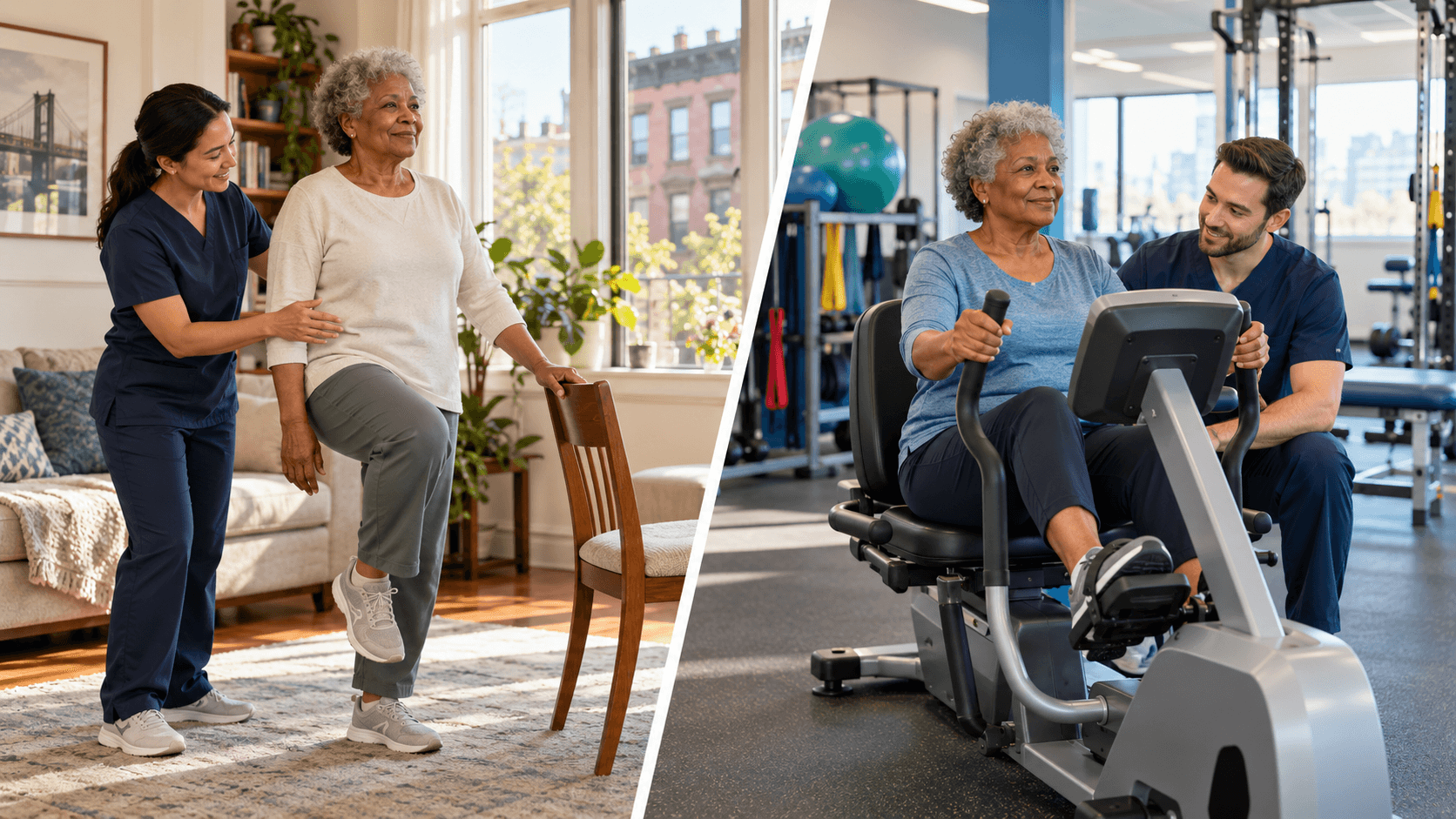
Physical therapy can help someone regain movement after an injury, improve balance, or work toward everyday goals such as getting out of a chair and walking safely. But where should that therapy happen: at home or in a clinic?
The answer depends on the person’s condition, ability to travel, and treatment goals. Neither setting is automatically better. A therapist and the patient’s health care team can help choose the setting that makes the most sense—and that setting may change as recovery progresses.
When physical therapy at home may be appropriate
Home-based therapy can be especially useful when leaving home is difficult and the person needs skilled therapy in their own surroundings. A therapist can see the spaces the person actually uses: the stairs at the entrance, the route to the bathroom, or the chair they need to stand up from each day. Treatment can then focus on moving more safely in that environment.
For example, a person recovering from an illness may initially need help walking from the bedroom to the kitchen. Someone who has fallen may need to practice transfers and balance in the places where those difficulties occur. The therapist can also teach appropriate exercises and discuss ways to carry them out safely between visits.
Home physical therapy is skilled therapy, not the same service as having a home care aide. An aide may assist with daily activities under an authorized care plan; a physical therapist evaluates movement and provides a treatment plan for rehabilitation.
When a clinic may be the better choice
A clinic is often a good fit when a person can travel to appointments safely and would benefit from the space, equipment, and progression available there. Depending on the treatment plan, a clinic may offer exercise machines, balance equipment, and room to practice more demanding movements.
That can be valuable for someone rebuilding strength after surgery, working toward a return to work, or ready to move beyond the exercises they can do at home. A clinic visit also gives the therapist an opportunity to adjust the treatment plan as the person improves.
Marton Care Health Center is preparing to offer physical therapy in its state-of-the-art rehabilitation gym in East Flatbush, Brooklyn. Families interested in future services and opening updates can visit MartonCareHealthCenter.com.
Can someone start at home and later move to a clinic?
Yes. A person’s needs can change. Home therapy may be the appropriate starting point when travel is especially difficult. As mobility and endurance improve, outpatient therapy may become a better match for the next set of goals.
The move should be coordinated with the treating providers. Ask what goals have been met, what still needs work, and which setting can best support the next stage of recovery. Coverage rules also matter.
What does Medicare cover?
Original Medicare may cover physical therapy as part of the home health benefit when its requirements are met, including a need for qualifying skilled services and being homebound. Being homebound does not necessarily mean a person can never leave home; Medicare applies specific criteria concerning the difficulty of leaving and the circumstances of trips outside the home.
Medicare Part B also helps cover medically necessary outpatient physical therapy for eligible beneficiaries. The provider, setting, and coverage requirements should be checked before treatment begins. Medicare Advantage and Medicaid plan arrangements may differ, so members should confirm network participation, referrals, authorization requirements, and costs with their plan.
Questions to ask before choosing a setting
- What specific activities should therapy help me do?
- Is it safe and practical for me to travel to a clinic?
- Would practicing in my home address a problem I face every day?
- Would clinic equipment help me reach my next goal?
- What does my insurance cover, and is authorization needed?
- When should we review whether the current setting is still the best fit?
The right physical therapy setting is the one that supports the person’s current needs and realistic goals. For some, that begins at home. For others, a clinic is the right place to start. Many people may benefit from both at different points in their recovery.
This article is general information and is not a personal treatment recommendation. Discuss your condition and coverage with your treating clinician and health plan.